

 








|
|
OCTOBER 15 | 16 | 17 | 18 | 19 | 20 | 21 | 22 | 23 Programme - Gallery
2
Programme -
Parallel events
Saturday 15
18h00,
Large Auditorium
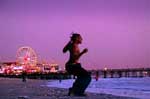 Rize [Openning
Session] Rize [Openning
Session]
David LaChapell
86’ USA 2005
“Rize” reveals a groundbreaking dance phenomenon
that's exploding on the streets of South Central, Los Angeles. Taking
advantage of unprecedented access, this documentary film brings to
first light a revolutionary form of artistic expression borne from
oppression.
The aggressive and visually stunning dance modernizes moves indigenous
to African tribal rituals and features mind-blowing, athletic movement
sped up to impossible speeds. “Rize” tracks
the fascinating evolution of the dance: we meet Tommy Johnson (Tommy
the Clown), who first created the style as a response to the 1992
Rodney King riots and named it Clowning, as well as the kids who
developed the movement into what they now call Krumping. The kids
use dance as an alternative to gangs and hustling.
21h00, Small Auditorium
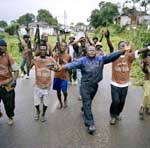 Liberia:
an Uncivil War [I] Liberia:
an Uncivil War [I]
Jonathan Stack
102’ USA 2004
In Liberia, the summer of 2003 was pure insanity: two armies are in the final
battle of a fifteen-year civil war, holding the capital under siege while thousands
die from mortar shells launched from afar. As the soldiers, mostly teenagers,
fight a bloody urban battle, the nation prays that American forces show up
to put an end to the violence. Liberia, a country founded by freed American
slaves, has a long intertwined history with America. The film presents the
complex layers of the conflict and focuses attention on the moral failure of
the U.S. to respond to a growing humanitarian crisis.
21h00 Large Auditorium
 Mermaids [CI] Mermaids [CI]
Dina Campos Lopes
70’ Portugal 2005
Invited by Portuguese organizations, Rebecca Gomperts launches
pro-choice intervention action in Portugal. Managing director of
the organization Women on Waves, this abortion activist heads on
with her polemic actions, these cross national frontiers and question
a pre-established structure of intervention in public life. The “Abortion
Boat”, as it is known by the media, rescues
from international maritime laws the possibility to transport a
gynecological clinic, fully equipped, to women that otherwise have
to turn to illegal abortion. Once in international waters the boat
is under the laws of the flag's origin country – The Netherlands,
after visiting Ireland and Poland the boat sails to Portuguese
waters.
23h00 Small Auditorium
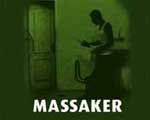 Massaker [I] Massaker [I]
Monika Borgmann, Lokman Slim, Hermann
Theissen
98’ Germany 2004
Twenty years later after the massacre of Sabra and Shatila during the Lebanese
civil war, the directors set out to discover what drives “normal” people
to carry out such excessive acts of violence and atrocities. Is it war that
made murderers of them? Six of the militiamen involved are interviewed: six
perpetrators, each with his own character and life story but who obeying commands
and of their own free will jointly participated in the massacre. The restricted
area where the interview is held represents an austerely radical choice that
casts the figures in ghostly roles. “Massaker” is neither a parody
of a trial nor an attempt at psychotherapy. Rather, it can be understood as
a psycho-political analysis.
23h00, Large Auditorium
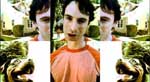 Cell
Stories [CI] Cell
Stories [CI]
Ed Lachman
10’ USA 2004
This is the first documentary to be entirely shot with the video function of
a cell phone. Four ultra-short films in which people tell tall tales about
their cell phones. The image is divided into six segments that chop up the
narrator and visualise the story.
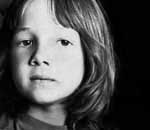 Following
Sean [CI] Following
Sean [CI]
Ralph Arlyck
88’ USA 2004
Filmmaker Ralph Arlyck first met Sean while living as a
graduate student in San Francisco's Haight Ashbury neighborhood
at the height of the 1960s. The city was awash with the trappings
of America's cultural revolution-the San Francisco State University
campus flooded with cops in riot gear, the Haight filled with drifters
and idealists, and, on the third floor of Arlyck's building, a
comeone-come-all crashpad apartment. It was from this top floor
commune that the precocious 4-year-old Sean would occasionally
wander downstairs to visit and talk-and one day Arlyck turned on
his camera. Thirty years, three generations, and a lifetime later,
Arlyck has returned to San Francisco in search of who the adult
Sean may have become.
[top]
Sunday 16
14h30, Small Auditorium
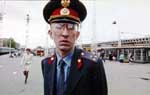 Wednesday [R] Wednesday [R]
Victor Kossakovski
93’ Russia 1997
Wednesday, July 19th, 1961. It is summertime and the newspapers are filled
with the usual articles. The world is deeply embedded in the Cold War. Fifty-one
girls and fifty boys are born in Leningrad on this day. One of them is filmmaker
Viktor Kossakovsky. St. Petersburg, 1995. The city carries the name of its
founder once again. This small detail registers the enormous political changes
that have occurred since those 101 children were born. What ever happened to
them? How have their lives evolved since July 19, 1961? Does this date bind
them to a shared destiny, or will they have nothing in common at all? Setting
out with nothing but these questions and a camera, Kossakovsky undertakes the
massive challenge of locating the 100 other people who share his birth date.
14h30, Large Auditorium
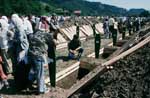 Srebrenica:
a Cry from the Grave [HE] Srebrenica:
a Cry from the Grave [HE]
Leslie Woodhead
104’ United Kingdom 1999
Srebrenica, Bosnia, the world's first United Nations Safe Area, was the site
of the worst case of genocide in Europe since World War II. In July 1995, the
Bosnian Serb army staged a brutal takeover of the small, intimate spa town
and its surrounding region. Over a period
of five days, the Bosnian Serb soldiers separated Muslim families and systematically
murdered over 7,000 men and boys in fields, schools, and warehouses.
16h30, Small Auditorium
 The
Pipeline Next Door [I] The
Pipeline Next Door [I]
Nino Kirtadzé
90’ France 2005
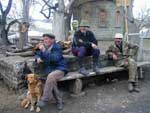
The little village of Sakiré is witnessing the most feverish days it
has ever seen. A giant pipeline built by British Petroleum will soon cut right
through this haven of peace, this oasis of clean air, this Caucasian paradise...
This film is a human comedy with a universal dimension, a modern fairy tale,
intertwining in a unique way a local reality with a global dimension. It is
a parable for globalization: in any other country, small communities attached
to their roots and customs could experience the same thing if they were confronted
with decisions coming from powerful and distant countries...
16h30, Large Auditorium
 Shape
of the Moon [CI] Shape
of the Moon [CI]
Leonard Retel Helmrich
92’ The Neetherlands 2004
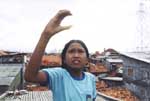
Shape of the Moon follows one Indonesian family navigating their country's
myriad partitions: between urban and rural, Muslim and Christian, old world
and new. Catholic widow Rumidja provides the film's anchor, as she struggles
to overcome the chaos and poverty of urban Jakarta, and attempts to adapt to
her son's recent conversion to Islam. With Jakarta growing ever more violent,
and some of its citizens increasingly fundamentalist, Rumidja dreams of escaping
to her native Central Java, but knows that its villages offer little hope for
her or her small granddaughter.
18h30, Small Auditorium
 From
the East [HE] From
the East [HE]
Chantal Ackerman
107’ France 1993
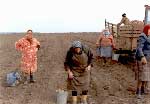
Without dialogue or commentary, Chantal Akerman has created a revelatory “documentary
bordering upon fiction” in which her camera traverses the places, people,
and landscapes encountered on a voyage begun in late summer in East Germany,
heading across Poland, eventually ending in deep winter in Moscow. In an attempt
to capture, “while there is still time,” the look of countries
in throes a great change, “D'Est” takes us through a world of crumbling
symbols where individuals continue to struggle for survival.
18h30, Large Auditorium
 The
Light of Ria Formosa [P] The
Light of Ria Formosa [P]
João Botelho
52’ Portugal 2005
Meandering among the Milreu Roman ruins, amid the remains of magnificent mosaics,
a mother (played by actress Susana Borges) teaches her son the ways of life
and braces him for a journey drawing on the advice of “stoic” Seneca – a
man who was so wise and ascetic that the mad despot Nero, to whom Seneca was
counsellor, distressed by the extent of his knowledge and insouciance, “ordered” him
to commit suicide. “Reading breeds intelligence…” The
same holds true for seeing and listening. Thus, we follow mother and son, alone
or together, on a journey over a stretch of land, estuary and sea, over a supposedly “protected” (?)
area a little over 40 kms long, a unique, vibrant and striking lagoon system
where light has centre stage. “That fleshly light that quivers and stirs
like the wings of a cicada”, as Raul Brandão put it, that tangible
light which is the origin of all life and all thought, as I would put it.
João Botelho
21h00 Small Auditorium
 Beckett’s
Prisoners [I] Beckett’s
Prisoners [I]
Michka Saal
90’ France 2005
The story of an encounter between two worlds that never meet. A world of poetry
and freedom, and a world of darkness where freedom is unknown. This true story
starts in a maximum security prison in Sweden where a young actor decides to
direct Samuel Beckett's “Waiting for Godot”, with five inmates
in the main roles. The rehearsals and acting are of a unique authenticity:
Beckett himself is so moved by the truth in their work, that he gives away
the rights for his play. Then a contagious madness carries everybody away:
the prison's manager is first to think that the prisoners should perform in
a live theatre and pleads for the permission to a public premiere to Swedish
authorities. For the first time in prison's history, five prisoners travel
out of their maximum security jail, to perform outside in the free world, in
Göteburg Theatre.
21h00, Large Auditorium
 Fiat
Lux [P] Fiat
Lux [P]
Luís Alves de Matos
16’ Portugal 2005
In a place near Tondela, a small community waited nearly
25 years for the electricity. Five years later they finally got
it.
 Portrait [P] Portrait [P]
Carlos Ruiz Carmona
83’ Portugal/Spain 2004
Family photographs, memories, landscapes and scenes
from the everyday life constitute the portrait of an attitude and
a way of life. The portrait of a generation where marriage was “until
death do us apart”, and a time of misery and oppression marked
by the inheritance of the Spanish Civil War. The portrait of man
and woman, father, mother and son, their worries, dreams, disappointments,
experiences and feelings. The portrait of identity, origin, memory
and a life like a puzzle to solve. Sometimes a confusing portrait,
almost blurred, like memories. A portrait where facial expressions
question the past, present and future, on the debate of life itself.
We go round and round again but questions remain: who are we and
why are we like this?
23h00, Small Auditorium
 Bread
Day [R] Bread
Day [R]
Sergei Dvortsevoi
53‘ Russia 1998
80 km from St Petersburg lies the near-abandoned workers’ settlement
where only a handful of elderly people remains. Food is delivered
to the people once a week. The elderly inhabitants can buy bread
only once a week, at a fixed time: Bread Day.
 In
the Dark [R] In
the Dark [R]
de Sergei Dvortsevoi
40‘ Finland 2004
80 km from St Petersburg lies the near-abandoned workers’ settlement
where only a handful of elderly people remains. Food is delivered
to the people once a week. The elderly inhabitants can buy bread
only once a week, at a fixed time: Bread Day.
23h00, Large Auditorium
 Darwin’s
Nightmare [SE] Darwin’s
Nightmare [SE]
Hubert Sauper
107‘ France/Austria 2004
“Darwin's Nightmare” is a tale about humans between the North and
the South, about globalization, and about fish. Some time in the 1960's, in the
heart of Africa, a new animal was introduced into Lake Victoria as a little scientific
experiment. The Nile Perch, a voracious predator, extinguished almost the entire
stock of the native fish species. However, the new fish multiplied so fast, that
its white fillets are today exported all around the world. Huge hulking ex-Soviet
cargo planes come daily to collect the latest catch in exchange for their southbound
cargo… Kalashnikovs
and ammunitions for the uncounted wars in the dark center of the continent. This
booming multinational industry of fish and weapons has created an ungodly globalized
alliance on the shores of the world's biggest tropical lake.
[top]
Monday 17
11h00, Small Auditorium
 Occupation:
Dreamland [I] Occupation:
Dreamland [I]
Garrett Scott, Ian Olds
78’ USA 2005
Occupation: Dreamland is a melancholic portrait of a squad of the US Army's 82nd
Airborne deployed in the doomed Iraqi city of Falluja during the winter of 2004.
A collective study of the squad unfolds as they cope with an environment of low-intensity
conflict and confusion creeping steadily towards catastrophe. Through the squad's
activities Occupation: Dreamland provides a vital glimpse into the last days
of Falluja before a final series of assaults began in the spring of 2004 that
effectively destroyed the city. The result is a revealing, sometimes surprising
look at Army life, operations and the complexity of American war in the 21st
century.
14h30, Small Auditorium
 The
Bridge [HE] The
Bridge [HE]
de Ileana Stanculescu
75’ Romenia 2004
An old bridge between a Romanian and a Ukrainian town is being rebuild with
the financial support of the European Union. The bridge over the Tisza river
was destroyed during the Second World War and the river became the border between
Romania and the Soviet Union. This border separated for almost fifty years
members of the same families, friends and neighbours. The reconstruction of
the bridge is now ready, but nobody is allowed to cross it. One of the reasons
for that is the enlargement of the E.U. Romania wants to become an E.U. member
in 2007 and has to secure its borders to the Ukraine.
16h30, Small Auditorium
 Meet
Me in the Rothko Room [CI] Meet
Me in the Rothko Room [CI]
Rob John
18’ United Kingdom 2004
Filmed over five days in the Tate Modern, this film primarily
acts as a social commentary, offering the viewer a chance to observe
the observing. The addition of narrative through an eclectic range
of characters and the Tate Modern's own audio act together to bring
the paintings and the life of Mark Rothko alive to both familiar
and non familiar audiences. Finally the voice of the director works
throughout the piece to add a personal element, taking the audience
on a journey of discovery.
 By
the Ways (A Journey with William Eggleston) [CI] By
the Ways (A Journey with William Eggleston) [CI]
Vincent Gérard and Cédric
Laty
90’ France 2005
A journey with William Eggleston. A journey through the
south of the United States, the home of William Eggleston: “the
father of colour photography”. For the last 40 years, Eggleston
photographs this arid land, which pretends to be making History.
A visionary?
The photographer, playing his own role, skirts around the revelation
of his character. In this way his persistent silence defies each
truth revealed. The film is continually sucked into an invisible
game between its own fiction and truths. Eggleston's photographs
as ruins of a far away civilization?
18h30, Large Auditorium
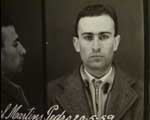 Still
Life [P] Still
Life [P]
Susana de Sousa Dias
72’ Portugal 2005
Within an image, another one is always hiding. Using only archive footage and
without words, “Still Life” aims to rediscover and delve into the
opacity of images made during the 48 years of Portuguese dictatorship (news,
war footage, propaganda documentaries, photos of political prisoners and also
previously never seen rushes) in order to foster new interpretations.
21h00, Large Auditorium
 Sherman’s
March [RM] Sherman’s
March [RM]
Ross McElwee
155’ USA 1986
Ross McElwee sets out to make a documentary about the lingering effects of
General Sherman's march of destruction through the South during the Civil War,
but is continually sidetracked by women who come and go in his life, his recurring
dreams of nuclear holocaust, and Burt Reynolds. An autobiographical documentary
on life, love, nuclear preparedness, and the various neuroses of General William
Sherman.
23h00, Small Auditorium
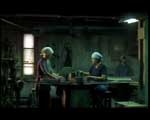 Factory [CI] Factory [CI]
Sergei Loznitsa
30’ Russia 2004
One day is like the whole life. This film depicts one day
of
an operating fabric. This film is about a human being as
a part of the machinery world or a machinery world as a
part of human world. Metal produced by people enslaves
them and reduce their lives to pure reflexes.
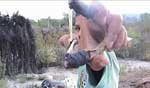 Tropic
of Cancer [CI] Tropic
of Cancer [CI]
Eugenio Polgovsky
53’ Mexico 2004
At the latitude of the Tropic of Cancer in the desert of
San Luis Potosi, Mexico, various families survive by hunting animals,
which they consume and sell in the highway.
[top]
Tuesday 18
11h00, Small Auditorium
 The
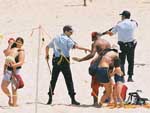
Beach Rampage that Never Was [I] The
Beach Rampage that Never Was [I]
Diana Adringa, Mamadou Ba, Bruno Cabral,
Joana Lucas,
Jorge Costa, Pedro Rodrigues
20’ Portugal 2005
June 10th, Carcavelos beach, nearby Lisbon. Many youngsters
celebrate a national holiday under the sun. Tension and insults
are in the air. The police will eventually arrive. At 8pm, the
news on every TV station present to the country what would become
the famous “arrastão”: a massive crime, hundreds
of black robbers sweep the beach in broad day light, in Portugal's
National Day. The media speech talks of organized crime, gang action,
terror, insecurity and vigilance. Later, witnesses and police give
a different version of the facts but are unheard in the midst of
the media raucous.
 Operation
Spring [I] Operation
Spring [I]
Angelika Schuster, Tristan Sindelgruber
95’ Austria 2005
Early in the morning on May 1999, 850 police officers stormed
apartments and refugee dormitories throughout Austria. The code
name for the police raid is “Operation Spring”, it
was the largest police operation launched since 1945. In all, some
100 Africans were arrested. The media claimed that thanks to the
help of the first “great bugging operation”, the authorities
managed to arrest the bosses of an international Nigerian drug
ring. In the years to follow what evolves out of this are the largest
criminal proceedings directed against Africans in Austria. Almost
everyone accused is eventually convicted. The total sentence amounts
to several hundred years of imprisonment. The film poses the question
of whether the defendants ever stood a chance of receiving a fair
trial.
14h30, Small Auditorium
Charleen [RM]
Ross McElwee
59’ USA 1978
Portrait of North Carolina native Charleen Swansea, a protégé of
Ezra Pound, poet, and innovative teacher in the public schools;
a month in her fast-paced eccentric life.
 Backyard [RM] Backyard [RM]
Ross McElwee
40’ USA 1984
An autobiographical look at the filmmaker's relationship
with his father, and his family's relationship with the black people
who have worked for them; a study of the genteel uneasiness underlying
black/white relationships in one North Carolina household.
16h30, Small Auditorium
 Mémoires
d’Immigrès [HE] Mémoires
d’Immigrès [HE]
Yamina Benguigui
160’ France 1998
In a series of moving portraits, Yamina Benguigui reconstitutes memories of
North African immigration and retraces the itinerary of families whose destiny
is wedded to that of France. Immigrants' Memories is built around three episodes
and three generations: the first came to France during the prosperous postwar
period; the second, reunited by the “family reunification” program
in the 1970s; the third, that of the children born in France and who are most
often French themselves.
18h30, Large Auditorium
 The
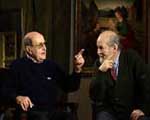
15th Stone [P] The
15th Stone [P]
Rita Azevedo Gomes
74’ Portugal 2005
Three generations. Manoel de Oliveira, the Director who has lived through the
all century in which cinema itself was born and whose every film both surprises
us and confirms his cinematographic concept. João Bénard da Costa,
the historian, the critic and the man who dedicated his whole life to showing
us the art of the cinema. And Rita Azevedo Gomes, the third generation, who
has been witness to these men's long lasting and very unique relationship.
21h00, Large Auditorium
 Before
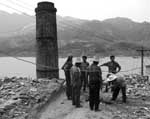
the Flood [CI] Before
the Flood [CI]
Yan Yu and Li Yifan
143’ China 2005
The Three Gorges Dam, the largest ever built on earth, is under construction
in China. It is expected to be completed in 2009. Until then, millions of local
residents will have been relocated, because hundreds of towns and large areas
of land will be under water – as well as countless natural monuments
and historically important places in the Three Gorges area, including Fengjie,
a town that gained fame as the hometown of Li Bai, one of the most important
poets in Chinese history. Yan Mo documents the relocation of Fengjie in 2002,
before the first stage of flooding took place – a move that greatly changed
the lives of many people and caused them worry and strife.
23h00, Small Auditorium
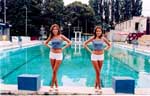 66
Seasons [HE] 66
Seasons [HE]
Peter Kerekes
86’ Eslováquia 2003
At the Kosice swimming pool, history came to bathe. Seen through several stories
which unfolded between the years 1936 and 2002, the documentary captures 66
seasons at the popular swimming pool, and the same number of years in the history
of Central and
Eastern Europe. Different generations of swimmers replaced one another over
the course of the decades, and their private stories merge with universal history
in a unique way.
[top]
Wednesday 19
14h30, Large Auditorium
 Profils
Paysans: le Quotidien [SE] Profils
Paysans: le Quotidien [SE]
Raymond Depardon
85’ France 2004
Second part of the Profils Paysans trilogy. The rural districts of Lozère,
Ardèche
and Haute-Loire, located among the low-lying mountains at the center of France,
are traditionally known for agriculture. Today however, spurred by the establishment
of the European Union, the region's family farms are increasingly being converted
into luxury country homes, while the country's agricultural industry has largely
been monopolized by large conglomerates. The new young farmers who wish to
settle down in these areas are continuously confronted with bureaucratic and
financial hardships. In Profils Paysans: le Quotidien, Raymond Depardon pays
tribute to the farming men and women who in the face of changing times persist
in maintaining a way of life that would otherwise be forgotten.
16h30, Small Auditorium
 Time
Indefinite [RM] Time
Indefinite [RM]
Ross McElwee
114’ USA 1993
Takes up where Sherman's March left off. The filmmaker confronts love, marriage,
life, death, and other matters of importance.
18h30, Large Auditorium
 Eating
your Heart Out - the Work of Rui Chafes and Vera Mantero [P] Eating
your Heart Out - the Work of Rui Chafes and Vera Mantero [P]
Inês Oliveira
30’ Portugal 2005
This film follows the process of creating Eating Your Heart
Out. This work of art presented at São Paulo Biennal of
Arts in 2004, was the first collaboration between the Portuguese
artists Rui Chafes (sculptor) and Vera Mantero (choreographer and
dancer). The result is a huge iron sculpture where the dancer performs
a mysterious play, suspended in the air, with paintings all over
her naked body. How did these artists work together, how did the
idea develop, how was the installation at the Oscar Niemeyer pavillion
in Brazil, how is to be in the backstage of such an event?
 Skin
to Stone [P] Skin
to Stone [P]
Pedro Sena Nunes
40’ Portugal 2005
The green mountains tried to escape from the flames that
scorched the earth. Through the thick air, a breeze led us to a
new venture: to explore the Panasqueira Mines, abandoned fifteen
years ago, and to set it within the life of the miner community.
We came across a deserted village, watched over by one or two remaining
inhabitants who followed in our footsteps. We went 450 metres down
the dark pits to come closer to the miners. We heard stories and
danced around with them. A new work came to life, one that sunk
beneath the skin.
21h00, Large Auditorium
 Emergency,
Towns at Night [CI] Emergency,
Towns at Night [CI]
Pierre Maillis-Laval
53’ France 2004
The medical emergency rescue teams fight to keep at all
costs “the
breath of life”. A discreet and restless
presence in the night of the cities.
 Boxing
File [CI] Boxing
File [CI]
Miguel Clara Vasconcelos
53’ Portugal 2005
Five situations that directly influence the career of the
professional boxer Jorge Pina. You get to meet Mário, an
amateur pugilist, Castelli the president of the boxing association,
Vítor
the trainer, Jorge Pina himself and Magalhães the Manager.
You watch the preparation in the dressing room, the weighting of
the athletes, the gathering, the training, the gymnasiums and all
elements that circle a not very honest fight.
23h00, Large Auditorium
 Nous/Nihna [CI] Nous/Nihna [CI]
Danielle Arbid
13’ France 2005
“My father was leaving. I filmed him to keep a record.
I
was worried that he would never again enter my
thoughts; that I would loose all anger against him and all
memories of him”.
Danielle Arbid
 Avenge
But One of My Two Eyes [CI] Avenge
But One of My Two Eyes [CI]
Avi Mograbi
104’ Israel/France 2005
From the myths of Samson and Massada, the younger Israeli
generations learn that death is preferable to domination. Today,
as the second Intifada is raging, the Palestinians are constantly
humiliated by the Israeli army… Exhausted, these people
voice their anger and despair – just as the Hebrews did with
the Romans or Samson with the Philistines. Israeli filmmaker Avi
Mograbi still believes in the power of dialogue, with besieged
Palestinians, and with omnipresent Israeli army officials.
[top]
Thursday 20
11h00, Small Auditorium
 The
Ister [HE] The
Ister [HE]
David Barison and Daniel Ross
189’ Australia 2004
The Ister is a 3000km journey to the heart of Europe, from the mouth of the
Danube river at the Black Sea, to its source in the German Black Forest. The
film is based on the work of the most influential and controversial philosopher
of the 20th century, Martin Heidegger, who swore allegiance to the National
Socialists in 1933. By marrying a vast philosophical narrative with an epic
voyage up Europe's greatest waterway, the film invites the viewer to unravel
the extraordinary past and future of 'the West.'
14h30, Small Auditorium
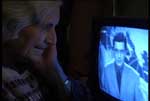 The
Box [CI] The
Box [CI]
Eva Stefani
11’ Greece 2004
An elderly woman falls in love with a television newscaster.
The film is a short monologue of the woman addressing her television
set.
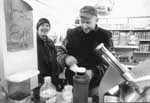 Alimentation
Générale [CI] Alimentation
Générale [CI]
Chantal Briet
84’ France 2005
In Epinay-sur-Seine, in the neighborhood called la Source,
Ali's grocery store is the only shop of the decayed shopping center
still in business. It's also the only place left for the forsaken
inhabitants of the surrounding tower blocks to meet, a shelter
where they can get together and exchange. By filming time going
by, on their faces, on their destiny, this chronicle shows the
importance of such a place, a small store in the middle of the
project, where in spite of difficulties and poverty, people still
share user-friendliness, laughter, human warmth.
16h30, Small Auditorium
 Mahaleo [SE] Mahaleo [SE]
Raymond Rajaonarivelo, Cesar Paes
and Marie-Clémence Paes
98’ France/Madagascar 2005
In Malagasy, “Mahaleo” means free, independent.
Mahaleo's voices and music have accompanied the people of Madagascar
ever since the collapse of the colonial regime. Yet, even after
30 years of success, the group's seven musicians still keep their
distance from the world of show-business, and remain deeply committed
to helping their country's development; their professions range
from surgeon to farmer, physician to sociologist and member of
parliament. Accompanied by the group's rhythmic melodies, the film
follows the singers through their daily lives, giving us a glimpse
of the far-reaching social and economic problems of the Malagasy
people.
18h30, Large Auditorium
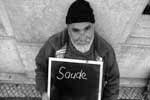 Wanting [P] Wanting [P]
Cláudia Varejão
20’ Portugal 2005
In the turbulence of the city life we sometimes forget or
underestimate things that we want, absences that hold us, delay
or even hurt us. In this documentary film, around one hundred inhabitants
from the area of Lisbon are asked to write on a small blackboard
what are they missing the most. There are answers from people of
different social backgrounds, different ages, several activities
that end up making an intimate portrait of the contemporary Portuguese
society.
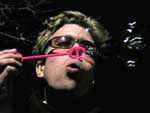 Bubbles
- 40 Years in Pursuit of Everything [P] Bubbles
- 40 Years in Pursuit of Everything [P]
Helena Lopes and Paulo Nuno Lopes
60’ Portugal 2005
Helena and Paulo spent ten years asking people if they were
happy. They interviewed American students at an elite university
and Nepalese shepherds who said the earth was flat. They talked
to Buddhist monks in pursuit of enlightenment in India, Portuguese
women in the hinterland stuck to the mores of olden days, and fishermen
who mocked destiny braving hazardous breakers on the country's
northern coast. Then Paulo returned to the States to do a PhD on
happiness. There they met four undergraduate students who made
a point of reinventing life everyday, which made them think about
what they had been doing all these years. So Paulo and Helena took
a journey back in time and tried to rid themselves of all the wrong
ideas life had taught them - in the pursuit of enlightenment, creativity
and fun.
21h00, Large Auditorium
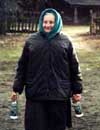 Moonshine [CI] Moonshine [CI]
Eugen Schlegel, Sebastian Heinzel
12’ Germany 2004
Somewhere in a remote village in Belarus lives Babushka
Vera. As all the old grannies here she is on her own. She feeds
the geese, walks to the well and distills legendary moonshine.
Once that saved her whole village.
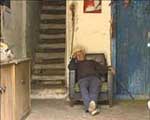 The
Sky Turns [CI] The
Sky Turns [CI]
Mercedes Álvarez
115’ Spain 2005
At present there remain fourteen inhabitants in Aldealseñor
(Castilla, Spain). They represent the final generation of a people
after more than a thousand years of life in the village. For the
moment, life goes on. Very soon, it will finally come to an end.
The inhabitants and the painter Pello Azketa share something: things
have begun to disappear befor their eyes. The director returns
to her origins and witnesses this evaporation.
23h00, Small Auditorium
 Broadway,
Black Sea [R] Broadway,
Black Sea [R]
Vitali Manskij
79’ Russia/Germany 2002
Refugees from the Caucasian republics, Armenians, Azerbaijanis and Russians,
meet on the shore of the Black Sea: they work as shop keepers, life guards,
karaoke singers, or just enjoy their holidays. It all happens at a place called
Broadway, which is no-where to be found on a map, not even the most detailed
ones. The temporary inhabitants of Broadway construct a whole world en miniature,
consisting of small carts, tents or booths parked in close, haphazard rows.
The scenery, which is put up for a few weeks during the summer, bubbles with
life – and in no way corresponds with ordinary daily life in Russia.
[top]
Friday 21
11h00, Small Auditorium
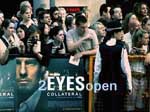 2
Eyes Open [CI] 2
Eyes Open [CI]
Mateo Willis
5’ United Kingdom 2005
What really happens at a movie premier of a superstar. A
crowd of people gather and jostle for position as they wait for
the star and the spectacle gathers a cross-section of personalities
into a whirlpool of watching. TV cameras are poised, security is
on high alert and fans push for a better view. Almost unnoticed
the star slips into view and quickly becomes the focus of a gaggling
array of cameras, hands and screams. Everyone's attention is riveted.
Or almost everyone. A body is dragged from the crowd, limp and
ominous.
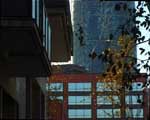 Agbar [CI] Agbar [CI]
Veronique Goel
10’ Switzerland 2005
This is the story, in three parts, of the Agbar Tower designed
by Jean Nouvel in Barcelona. This 144 meterhigh building, consisting
of a circular glass and metal facade, was newly inaugurated. What
better statement about such an oeuvre dominating the urban landscape
than filming it to assess its impact? Véronique Goël's
standpoint is radical and minimalist. She decides on four long
fixed shots, which diminish its looming presence by merging it
into the dense urban landscape.
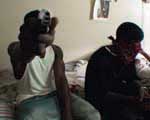 Bullets
in the Hood: a Bed-Stuy Story [CI] Bullets
in the Hood: a Bed-Stuy Story [CI]
Terrence Fisher, Daniel Howard
22’ USA 2004
When young Stansbury was fatally shot by a Housing cop on
the roof of a Brooklin Bed-Stuy apartment building, family and
friends looked for ways to handle their grief. While some suggested, “the
cops are expecting us to riot”, Stansbury's closest friend
Terrence Fisher took a different view. The 19-year-old Fisher picked
up a video-camera and documented the tense hours and days after
the controversial incident in collaboration with another close
friend, Danny Howard, 18.
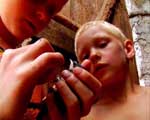 Behind
the Fence [CI] Behind
the Fence [CI]
Marcin Sauter
12’ Poland 2005
“One of the main thrusts behind the making of the
film is an attempt to return to the time of childhood, vacation,
and hot summer. I remember the feeling when the indefinite number
of noteworthy details, things to discover, stories to explore,
matters to think over made each day seem to last forever.”
Marcin Sauter
 Pepina [CI] Pepina [CI]
Pablo Aguero
15’ Argentina 2004
I was 77 years old when my last daughter was born.
 Farewell
1999 [CI] Farewell
1999 [CI]
Wu Ching - Yi
25’ Taiwan 2004
Four years after her mother's death, a daughter starts to
look for the memory of the mother through the documentation of
everyday life. She finally realizes the year 1999 had passed with
her death, never to return.
11h00, Large Auditorium
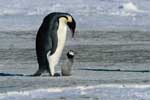 La
Marche de l'Empereur [SE] La
Marche de l'Empereur [SE]
Luc Jacquet
85’ France 2005
Each winter, alone in the pitiless ice deserts of Antarctica, deep in the most
inhospitable terrain on Earth, a truly remarkable journey takes place as it
has done for millennia. Emperor penguins in their thousands abandon the deep
blue security of their ocean home and clamber onto the frozen ice to begin
their long journey into a region so bleak, so extreme, it supports no other
wildlife at this time of year. In single file, the penguins march blinded by
blizzards, buffeted by gale force winds. Resolute, indomitable, driven by the
overpowering urge to reproduce, to assure the survival of the species.
14h30, Large Auditorium
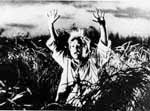 Sergei
Eisenstein: Autobiography [R] Sergei
Eisenstein: Autobiography [R]
Oleg Kovalov
90’ Russia 1996
The film is dedicated to the centenary of filmmaking and the centenary of Sergei
Eisenstein and is based on Eisenstein's memoirs. The plot of the film is a
long voyage abroad, which Eisenstein started in 1929. We see transformed episodes
from films of Eisenstein and his contemporaries, as well as rare archival shots
of Eisenstein himself. We hear only Eisenstein's reminiscences, which are sometimes
very personal. All this reflects the inner world of the great film director
during the tragic years of two Russian revolutions and the Stalin terror. Events
and personalities shown in the film underline the special place of Sergei Eisenstein
in the culture of the 20th century.
16h30, Small Auditorium
 Six
O’Clock News [RM] Six
O’Clock News [RM]
Ross McElwee
90’ USA 1996
The filmmaker drives across America obsessively recording with his VCR catastrophic
stories from local television news in the various communities he visits. He
then seeks out the people he has seen in the news to do more personal, in-depth
portraits. A meditation on media, mortality, and theology – American
style.
16h30, Large Auditorium
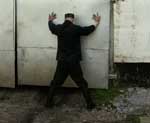 Three
Days and Never Again [R] Three
Days and Never Again [R]
Alexander Gutman
52’ Russia/Finland 1998
The mother first lost her son when he was condemned to death
by firing squad because, while serving in the Soviet Army, he shot
his commanding officer in order to protect his honour. Three years
after that verdict had been passed, the President of Russia commuted
the son’s death sentence to life imprisonment. Hope appeared
for mother and son. Once a year the mother was permitted to visit
the son in prison. But people grow old. The mother retired and
her pension is now barely enough to live on. She scraped together
all her saving and travelled to where her son was being held. For
the last time...For the mother it is a second death sentence...On
top of everything , a new law has been passed which means that
the State too has deprived her of the chance to see her son again...
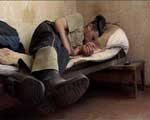 Life
in Peace [R] Life
in Peace [R]
Antoine Cattin and Pavel Kostomarov
45’ Russia 2004
The war has been going on in Chechnya since December 11th,
1994. Sultan's wife was killed and his house was destroyed. With
his son Apti, he escaped to the Russian countryside where he is
trying to start a new life. If the father can keep his integrity
till the end, what will happen to his son, a young Chechen refugee
on the enemy's territory? Should he become friend with the young
Russian going to war to Chechnya? Try to integrate in a society
with no future and rejecting him, or go back to his country destroyed
by war?
18h30, Small Auditorium
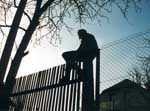 Across
the Border - Five Views from Neighbours [HE] Across
the Border - Five Views from Neighbours [HE]
Pawel Lozinski, Jan Gogola, Peter
Kerekes, Robert Lakatos and Biljana Cakic-Veselic
131’ Austria 2004
A polyglot portrait of ideas about borders at the beginning of the 21st century.
In an episodic journey from North to South five directors, from Poland, the
Czech Republic, Slovakia, Hungary and Slovenia, present their view and vision
of nation, identity and Europe. By placing their personal cinematographic imprint
on multifaceted portraits of their home countries, they open up a broad space
for encounters with the strangers next door. A journey through landscapes and
mentalities, and an area which is vanishing and at the same time undergoing
a rebirth – a serious, absurd, magical, funny and poetic crash course
on new old neighbours.
18h30, Large Auditorium
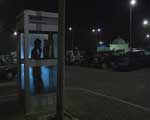 Eavesdropping [P] Eavesdropping [P]
Constantino Martins and Nuno Lisboa
22’ Portugal 2005
In a telephone box in Portugal, Brazilian emigrants come
to repeat the same gesture of connection between the two sides
of the Atlantic. As they relate their daily lives we listen to
what they are telling and we guess what they are hearing within
an indeterminate space between public and private, individual and
collective.
 I
Love as You Are [P] I
Love as You Are [P]
Sílvia Firmino
57’ Portugal 2005
Every year, in Lisbon, at the beginning of summer, Saint
Anthony's Day is celebrated. In the oldest districts, street festivities
and popular community marches are organized. On Saint Anthony's
night, each district presents its march in a competition parade
along the city's main avenue. This film follows one family from
the Bica neighbourhood during the preparation and rehearsals for
the parade through the point of view of its various members. The
expectation grows: will Bica neighbourhood win this year's March?
21h00, Small Auditorium
 Russian
Avant-Garde. Russian
Avant-Garde.
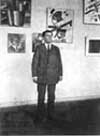
A Romance with the Revolution [R]
Alexander Krivonos
52’ Denmark 1999
The collection of avant-garde paintings and graphic art in the Russian Museum
is known around the world. This film tells the story of Russian avant-garde
art after the revolution of 1917. It is an account of the fate of Nikolai Punin,
the theoretician of the avant-garde, who for a long time was head of the department
of the latest tendencies in the Russian Museum. It was due to his efforts that
the works of avant-garde artists such as Kasimir Malevich, Pavel Filonov and
Vladimir Tatlin survived Stalin's repressions in the storerooms of the museum.
 The
House on the Island [R] The
House on the Island [R]
Alexander Krivonos
26’ Russia 1995
St. Petersburg is located on forty two islands. One of the biggest is Vasilyevsky
Island. Artists liked to lodge on this island long since. Any St Petersburg
cityscape can be taken and framed. That is what makes it so easy for an artist
to find a “good view” in St. Petersburg. But the tip or Spit of
Vasilyevsky Island is a favourite place with artists. Three generations of
St. Petersburg artist's family (Proshkiny) have reproduced St. Petersburg on
their canvases over all those years – as if they were afraid that this
city might disappear. They depicted the city, completed it by the power of
their imagination…
21h00, Large Auditorium
 Bosnia
Diaries [HE] Bosnia
Diaries [HE]
Joaquim Sapinho
82’ Portugal 2005
“I went to Bosnia after the war ended, in 1996, when the Dayton Peace Accord
was being implemented. Bosnia had been divided in two entities, which separated
the two main opposing forces of the conflict: the Serb Bosnians and the Muslim
Bosnians. Two years later, in 1998, I returned to Bosnia… This movie is
a diary of the two voyages, in which I deal with the memories of the war, the
death and destruction and with the victims' struggle who don't know how to return
home.”
Joaquim Sapinho
23h00, Small Auditorium
 The
Abandoned House [R] The
Abandoned House [R]
Lev Cherenstov
52’ Russia 1992
A documentary portrait gallery of rural life in contemporary
Russia. The director's focus upon the coexistence of authentic peasants
and the former city dwellers escaping urban problems of today giving
the film a good deal of both humor and sadness.
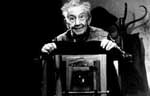 Photographer [R] Photographer [R]
Alexander Kott
10’ Russia 1997
An old man’s life-time occupation as a photographer
is about to end. Frozen moments of all aspects of life have been
documented by his camera. Now he wants to stop time. For himself.
Humorous, intimate and poetic.
23h00, Grande Auditório
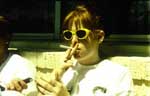 Bright
Leaves [RM] Bright
Leaves [RM]
Ross McElwee
107’ USA 2003
A journey taken across the social, economic, and psychological tobacco terrain
of North Carolina by a native Carolinian whose great-grandfather created the
famous brand of tobacco known as Bull Durham. A subjective, autobiographical
meditation on the allure of cigarettes and their troubling legacy for the state
of North Carolina. It's about loss and preservation, addiction and denial.
And it's about filmmaking - homemovie, documentary, and fiction filmmaking. “Bright
Leaves” explores the notion of legacy – what one generation passes
down to the next – and how this can be a particularly complicated topic
when the legacy under discussion is a Southern one and is tied to tobacco.
[top]
Saturday 22
14h30, Large Auditorium
 A
Decent Factory [I] A
Decent Factory [I]
Thomas Balmés
79’ France 2004
Is it possible to make profit and be ethical? Ethical questions are coming
more critical for Western companies when they are moving their production to
the countries of cheap labour. “A Decent Factory” follows the Ethical
Researcher of Nokia company on her trip to China to examine suppliers of Nokia.
Clashes between cultures, between ethics and profits, become obvious in this
new documentary film by Thomas Balmès. The film follows what happens
when a puritan Nordic person with no historical experience of colonialism is
facing the realities of globalisation through her own work.
16h30, Large Auditorium
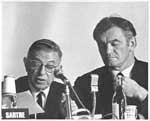 The
Russell Tribunal [SE] The
Russell Tribunal [SE]
Staffan Lamm
10’ Sweden 2003
Stockholm, 1967. The Russell tribunal, with participants
like Jean-Paul Sartre, investigates US war crimes in Vietnam.
Victims of the war are called to witness. Today, from a distance
of more than 35 years, the director reflects over his old footage
from the tribunal, a material that has never been shown before.
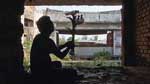 The
Burnt Theatre [SE] The
Burnt Theatre [SE]
Rithy Pahn
85’ France 2005
Cambodia is a land of broken dreams. There is no more
cinema, no more theatre, no more playhouses. The traditional
performing arts are becoming extinct, wiped out by television.
But there are still artists. Trustees of a tradition which they
cannot hand down for lack of institutions, financial backing
and places to perform, they are doomed to live in poverty or
else perform ethnic entertainments for tourists. The idea at
the heart of this film is to gather a group of actors around
a project that exemplifies the reality we live in: something
inside us – dignity, identity – is rotting to shreds.
We are in the process of losing our memory.
18h30, Small Auditorium
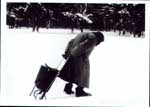 Alone [R] Alone [R]
Dimitri Kabakov
48’ Russia 1999
Every day, at the same time, an elderly lady with a hump and a cart boards
the same train. She leaves the train at a far away station and starts her journey
through the woods. Ana Diomina is as old as the Century. As we follow Ana Diomina
through the icy streets, her story and that of 20th Century Russia unfold.
They both share the history of loyalty and betrayal. A husband, officer in
the Red Army, suddenly arrested during the times of Stalin, a fifteen year
search for this man through the prison system; a brief encounter with the Tsarina
as a small child in 1915; her own incarceration for four months in 1944 – these
are only a few of the remarkable events which we discover as we travel though
history with this woman so full of spiritual strength.
18h30, Large Auditorium
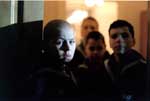 The
Three Rooms of Melancholia [SE] The
Three Rooms of Melancholia [SE]
Pirjo Honkasalo
106’ Finland 2004
“The 3 Rooms of Melancholia” depicts the vulnerability of a child's
mind. The main characters of the film are the 9 to 14-years-old boys at Kronstadt
Cadet Academy, a woman called Hadizhat Gataeva who saves the children from the
ruins of Chechnya and the children living across the border in the Ingushetia
refugee camp. The setting is the everlasting Chechen war.
21h30, Grande Auditório
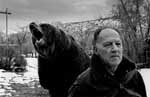 Grizzly
Man Grizzly
Man
[Awards announcement: closing ceremony]
Werner Herzog
103’ USA 2005
“Grizzly Man” explores the life and gruesome death of amateur grizzly
bear expert and wildlife preservationist Timothy Treadwell. The film is a powerful
cautionary tale about modern man's relationship to wild nature as it follows
Treadwell's journeys to Alaska, where he lived among the grizzlies and grew to
love them. Treadwell's crusade to defend the grizzlies tragically ended when
he-and his girlfriend-were attacked and killed by a rogue grizzly in October
2003.
[top]
Sunday 23
16h30, Large Auditorium
AWARDED MOVIES 1
18h30, Large Auditorium
AWARDED MOVIES 2
21h00, Large Auditorium
AWARDED MOVIES 3
[top]
Everyday, from 16 to 23
from 11h00 to 20h00, Galeria
de exposições da Culturgest
Gallery 2
Continuous Video projections, of works which complete two sections of the program
and of a pedagogical initiative of “doclisboa 2005”, are being
shown in 3 different rooms in the exhibition gallery of Culturgest. In room
number 1, a collection of Ross McElwee’s movies, which are further away
from the more notorious autobiographical characteristics of his work, is being
presented and in this way completing the entire retrospective of his work.
In room number 2, a collection of movies and documentaries which relate some
of the themes in the section “Histories of Europe”, more specifically
immigration (“magrebina em Melilla”, “L’europe au Pied
du Mur” and from Turkey in “The unwanted”) also regarding
the war in ex-Yugoslavia (“Srebrenica: Never Again?” and the project “Videoletters”).
In room number 3, the showing of “Five”, movie-installation from
Abbas Kiarostami constituting of five sequence-plans.
Sala 1 – Retrospective
Ross McElwee
Space Coast (1978,
90’)
Resident Exile – Portrait
of an Iranian in America (1981,
28’)
Something to Do with
the Wall (1990, 90’)
Kosuth (1997,
8’)
Curating (2002,
10’)
Sala 2 – Histories
of Europe
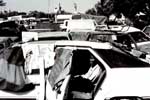 Melilla,
l’Europe au Pied du Mur Melilla,
l’Europe au Pied du Mur
(Arlette Girardot and Philippe Baqué, 54’, France, 2000)
Minuscule Spanish enclave on the Mediterranean coast
of Morocco, Melilla watches hundreds of emigrant candidates
arriving everyday.
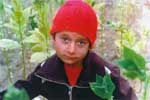 The
Unwanted The
Unwanted
(Adela Peeva, 52’, Bulgaria, 2000)
In the South-Eastern part of Bulgaria, close to border
with Turkey, two communities that have always lived together
- the Bulgarians and the Turks - are suddenly torn apart.
 VideoLetters VideoLetters
(coord: Rejger and Van den Broek, 45’, The Neetherlands, 2004)
Former friends, colleagues or neighbours separated by the
war in the former Yugoslavia exchange videoletters. Step by step,
they re establish what once was a close relationship.

Srebrenica: Never Again?
(Leslie Woodhead, 52’, United Kingdom, 2005)
“Srebrenica: Never Again?” follows the stories
of four people whose lives were overturned by the Srebrenica massacre
in July 1995.
Sala 3 – Abbas
Kiarostami
 Five Five
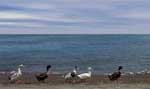
(Abbas Kiarostami, 73’, France/Iran, 2004)
The camera accompanies a piece of wood with which the waves are toying, at
the beach. People are walking along, by the seaside. The older people stop,
look at the waves, then walk away. Nobody goes past now. All that remains is
the sea and the waves breaking on the beach. Indistinct shapes on a beach in
winter. A group of dogs. A love story. Ducks noisily cross the frame in one
direction, then the other. A pond. Nighttime. Frogs. A chorus of sounds. Then,
the storm. And finally, dawn.
[top]
Parallel events
Wednesday 19
11h00, Large Auditorium
Masterclass with Alexander Krivonos [SE]
Alexander Krivonos is the director of two movies presented in the post-Soviet
Russian documentary section, The house on the island and Russian Avantgarde.
Alexander Krivonos, in collaboration with Sergey Dubrovskij, created the production
company Quadrat Film in 1995. Contrary to most of their colleagues they insisted
on doing their movies in video and not in 35 mm, looking for subjects in the
world of art. Russian Avantgarde (a Danish and Russian co-production) has become
the most international well known movie, after many other movies about art – about
Malevich, about Epin, about artists living in The House on the Island and about
other subjects, frequently related with the Russian museum in San Petersburg.
[Master class with free entrance by e-mail inscription anacristina@doclisboa.org]
Saturday 22
16h30, Small Auditorium
Masterclass with Ross McElwee [SE]
Closing the retrospective that doclisboa dedicates to the American director,
a cinema class in which Ross McElwee (who is not only a director but also an
university teacher) will speak about his movies and his singular approach of
the documentary spoken in the first person of the singular and how that is
connected with two of the masters of the direct cinema American School( Richard
Leacock and Frederick Wiseman).
Others:
Scholar sessions
Aiming to form new public to the documentary, the festival presents special
programs directed at schools. These sessions are free for organized groups
(at least 10 people) who schedule in advance.
Information and booking: 21 887 16 39 - mobile:93 870 16 87
Everyday
from 11h00 to 21h00
Video library
In addition to the movies shown in the two auditoriums and in Gallery
2, the festival’s audience will have the opportunity to see about 600
additional movies (full-length documentary and short documentary) previously
forwarded to doclisboa selection committee The video library room is in front
of the large auditorium, the entrance is free limited by the availability of
the viewing posts. Some of them are exclusively reserved to professionals credited
by festival.
from 14h00 to 23h00, Large
Auditorium
Forum/Meetings and debates - Jameson
Bar
Space room located in front of the Large Auditorium and meeting point between
the directors and the public, in the Forum take place during the festival debates
and talks with the Portuguese and foreign directors.
Lux Bar
Lux Bar
After Docs - Bar Lux
Traveling
Video installation by Rui Simões, Lux Bar, for 14 projectors.
Traveling between Occident and Orient. India and Flanders .Splashes of ambiances
in pure silk with ballerina and words of meetings about landscapes.
[top]
|

